
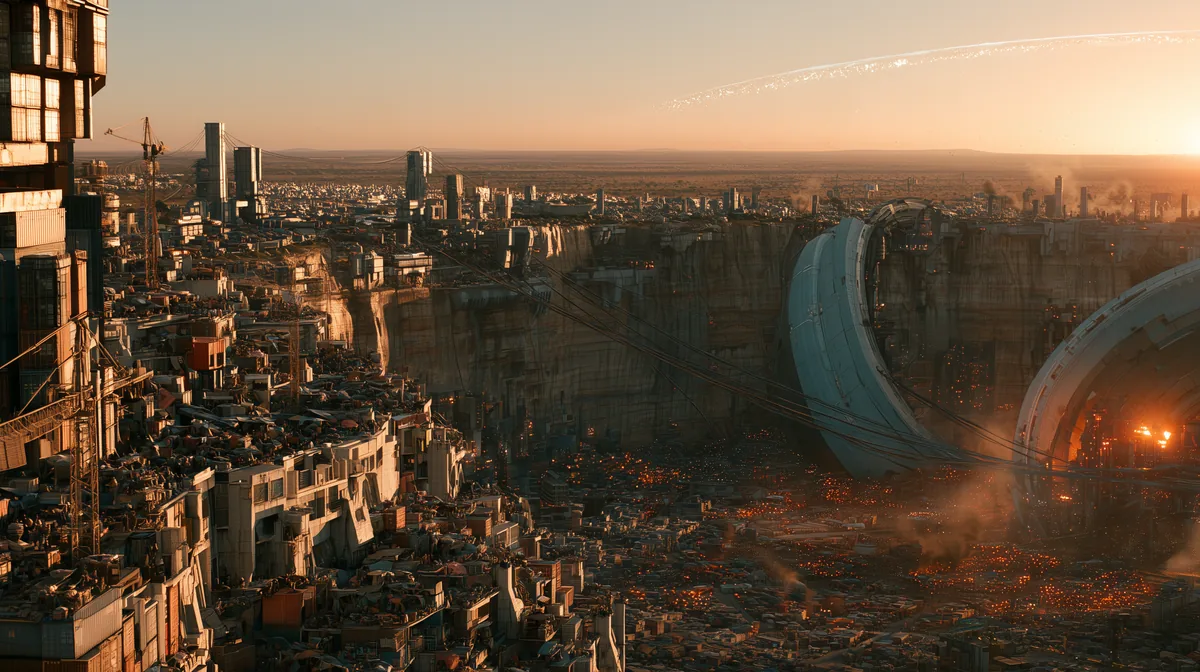
Nadir
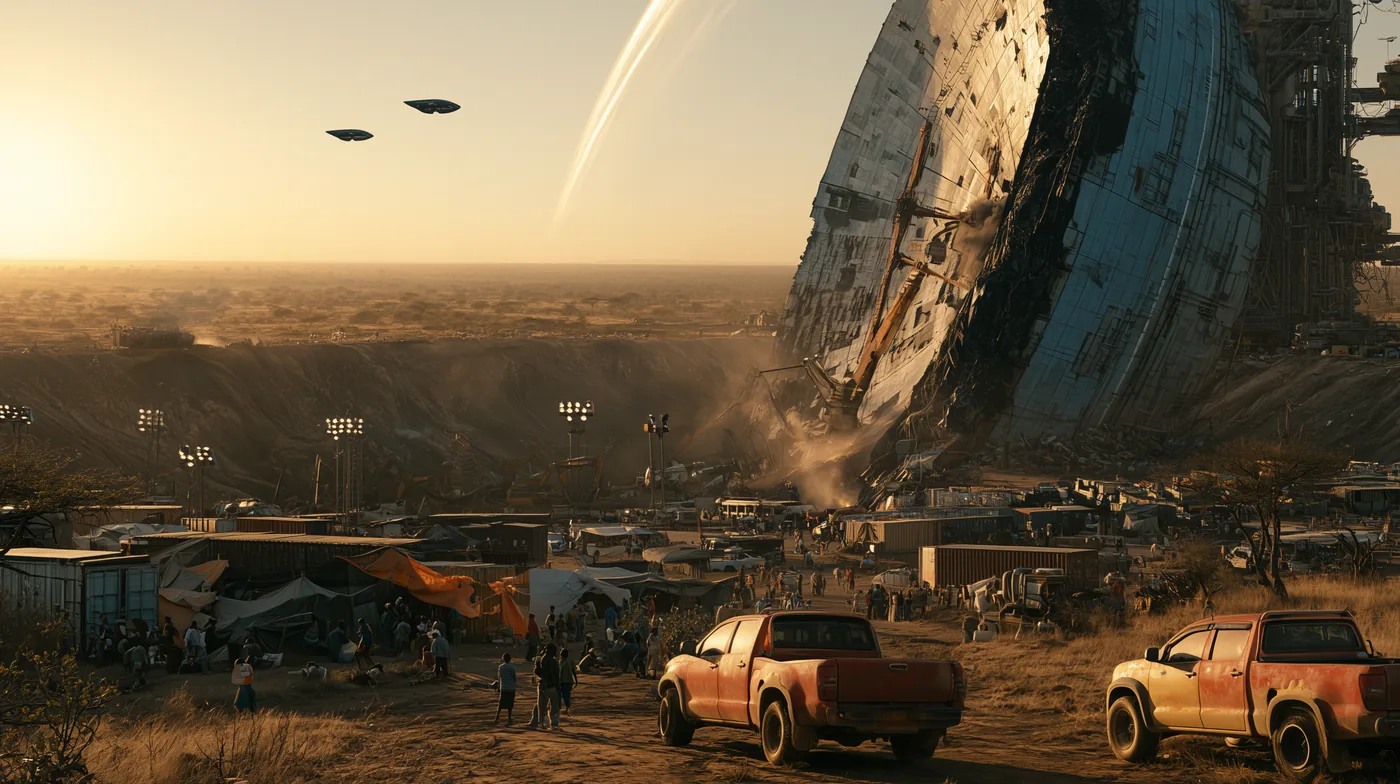
A city built into the walls of the largest impact crater in East Africa, where the anchor city Port Meridian once stood. The League’s seat and the belt’s unofficial capital. Terraces of lamps climb the crater wall; the war room sits inside it.
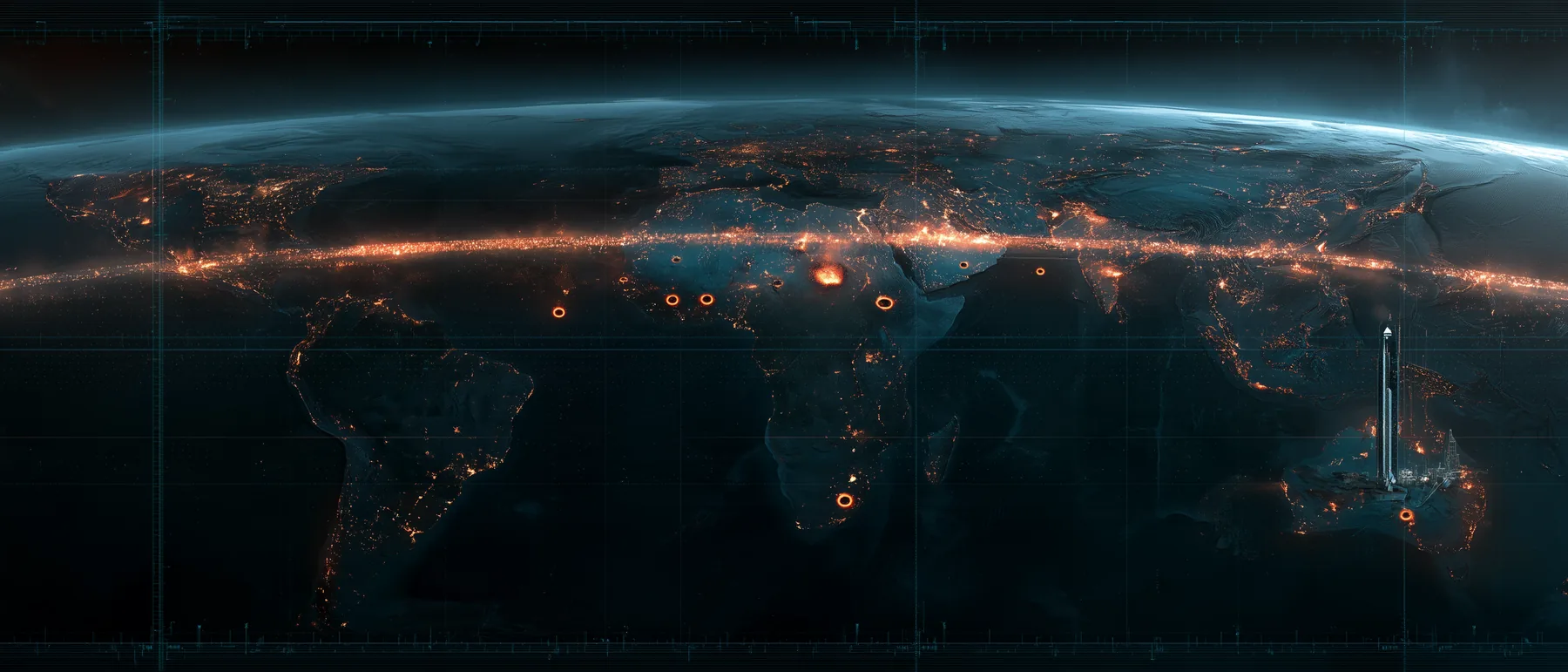
Everything the Ring was made of came down along one line around the equator. The people who live on that line have spent thirteen years cutting it up, fighting over it, and listening for the next piece.
Carbon composite steel. Superconducting cable. Fusion cells. Intact factory modules. One piece of the Ring is worth more than a mine full of ore.
It lies in fields where it fell: craters with debris heaped in them, bent girders, cable bundles, shattered plates, a glint of fused glass. Rich fields are fresh craters with bare, scorched rims. Old fields are half-grown over and half cut out.
About one fifth of the Ring is still up there, on decaying orbits. Every market in the belt sells a crash map. Impacts are announced, and the warning is short.
What is cut out is gone. A fresh field is the richest thing for a hundred kilometres, until it is empty.
The Consortium by the accord of 2039. The League by the ground it fell on. Since May 2107, by force.
A city built into the walls of the largest impact crater in East Africa, where the anchor city Port Meridian once stood. The League’s seat and the belt’s unofficial capital. Terraces of lamps climb the crater wall; the war room sits inside it.
An ordinary field, worked under the accord by both sides for six weeks. In May 2107 a shot was fired here that nobody has owned up to. The Salvage War started on this ground.
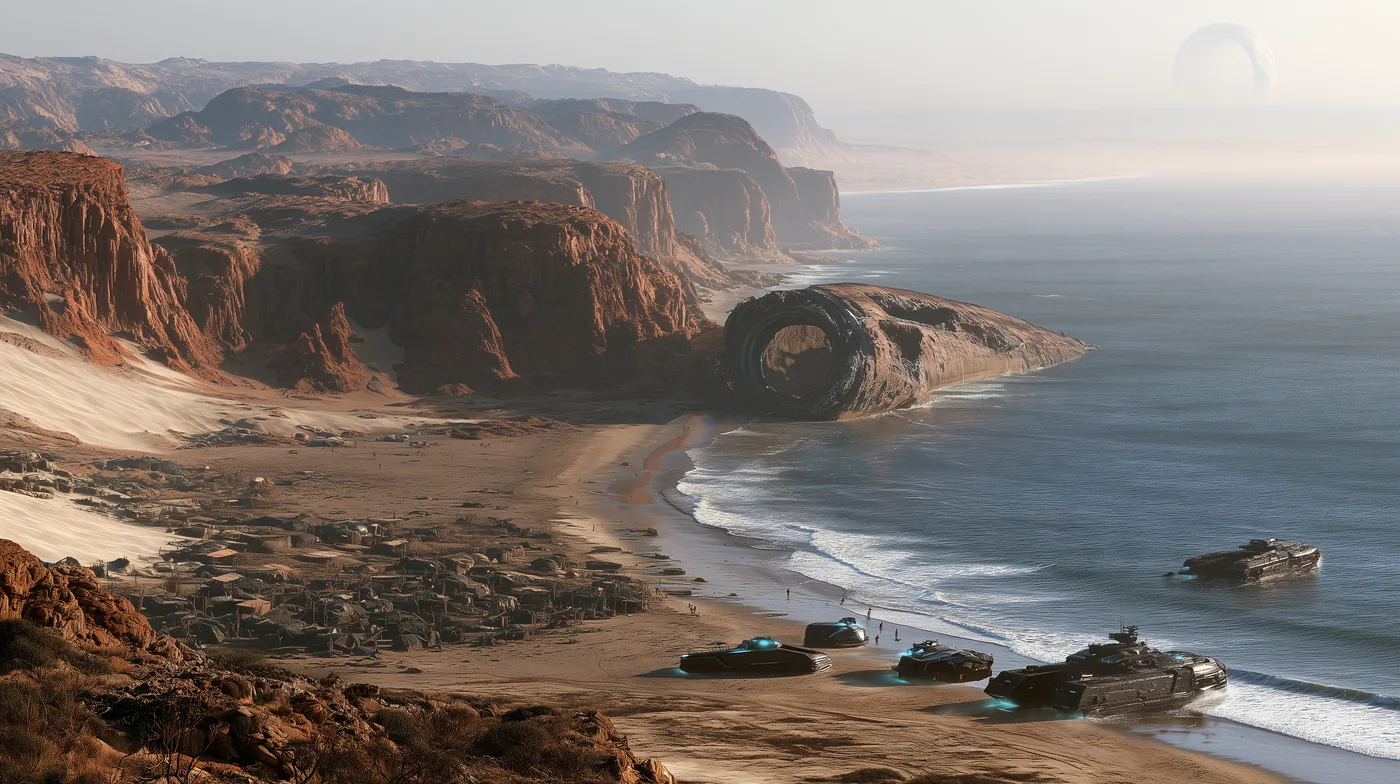
A wide basin on the coast, thick with fields and with the militias that fought over them before the Charter. A refinery town in its middle, still inhabited. The Consortium wants a beachhead here. The League wants its members to stop fighting each other.
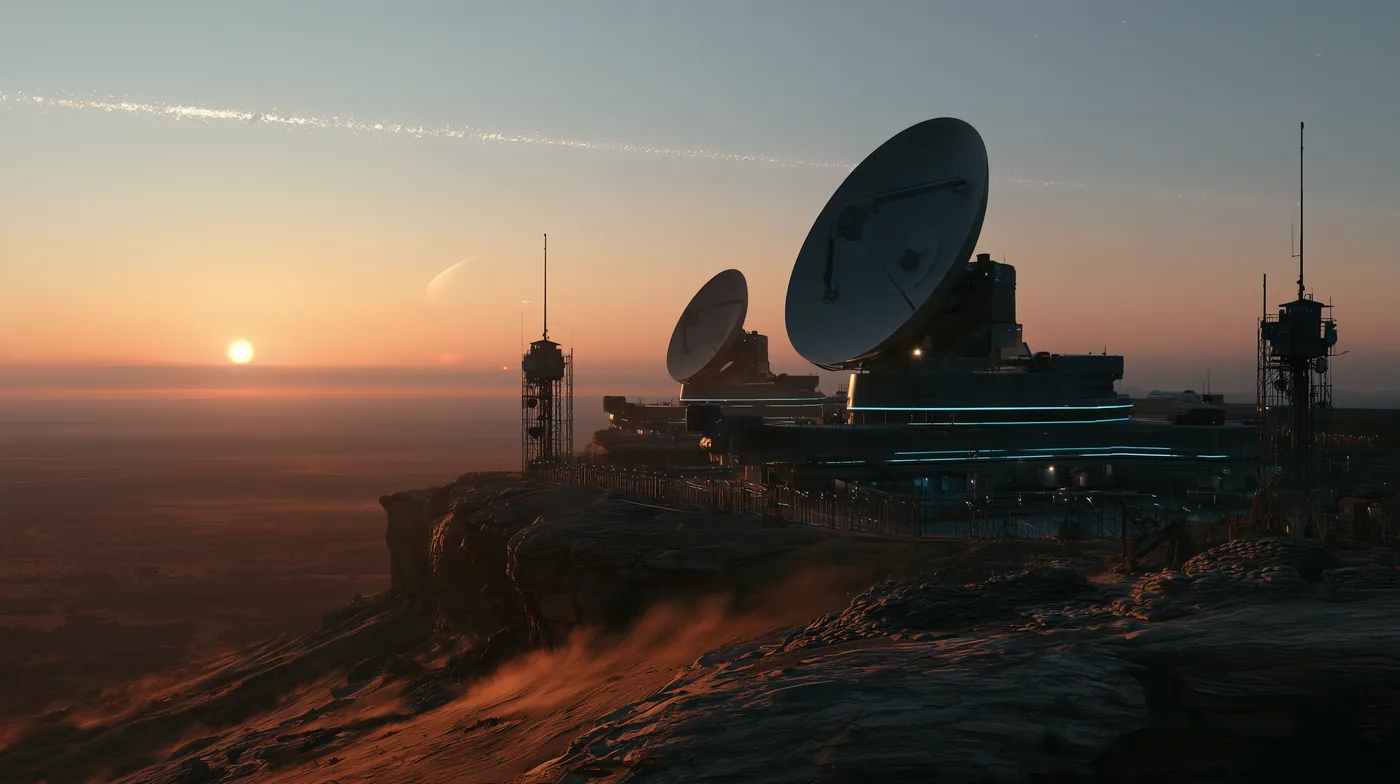
Three orbit-tracking ground stations on the high plateau. Whoever holds all three can calculate where the next big fragment comes down. In 2107 that matters more than any field.
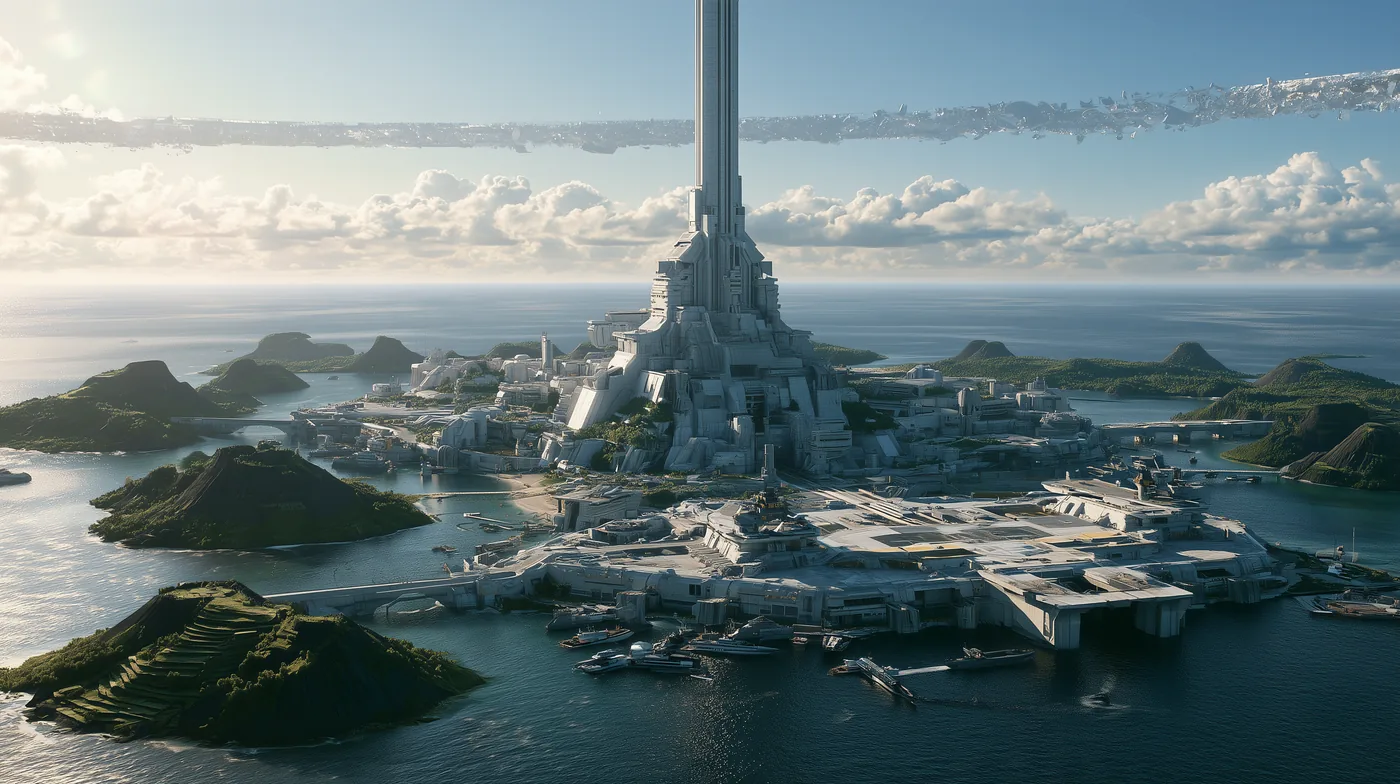
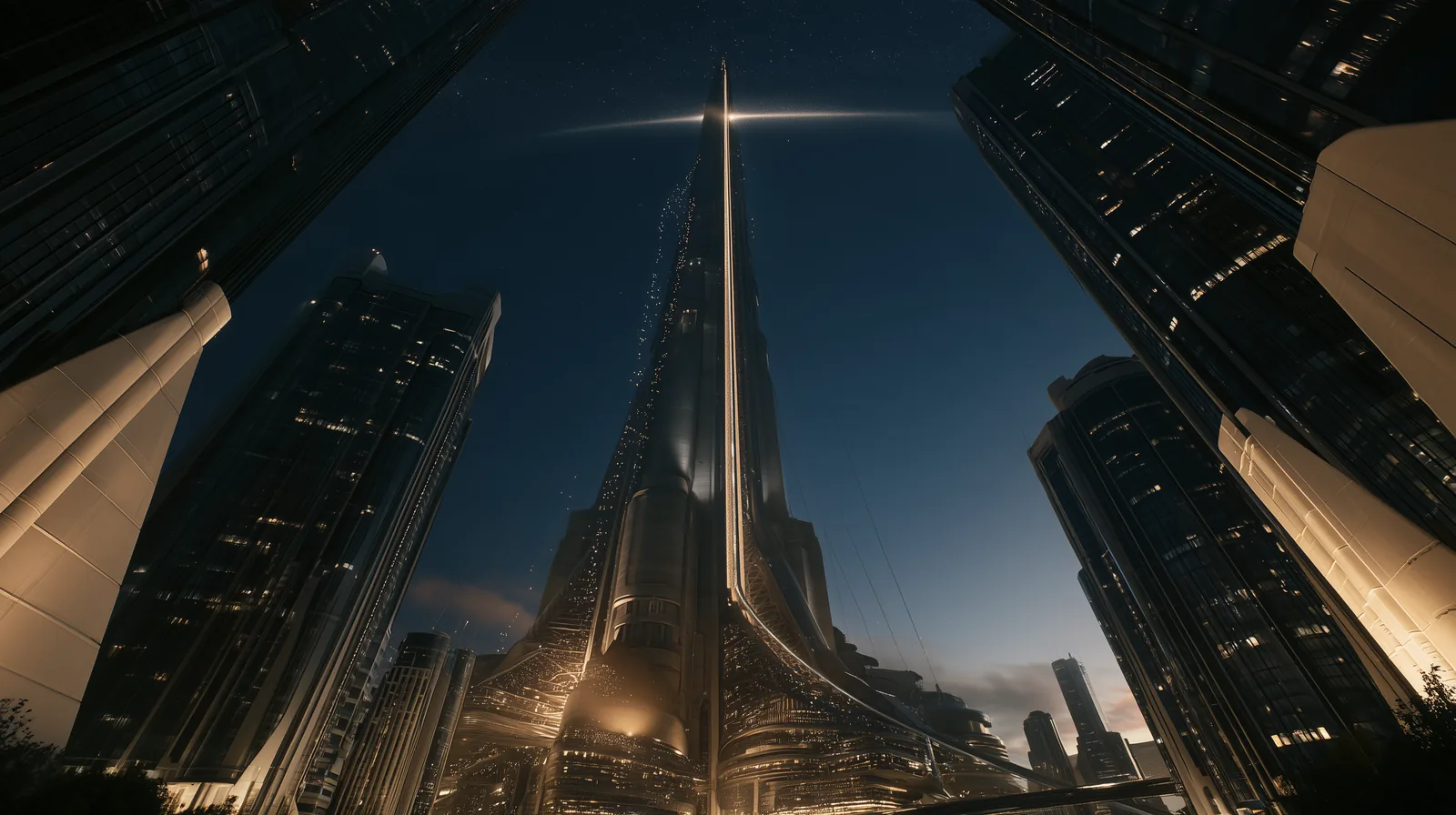
An artificial island in the Pacific carrying the only surviving space elevator. The Consortium’s headquarters, and the last road back to orbit. Everything the Consortium salvages is hauled here.
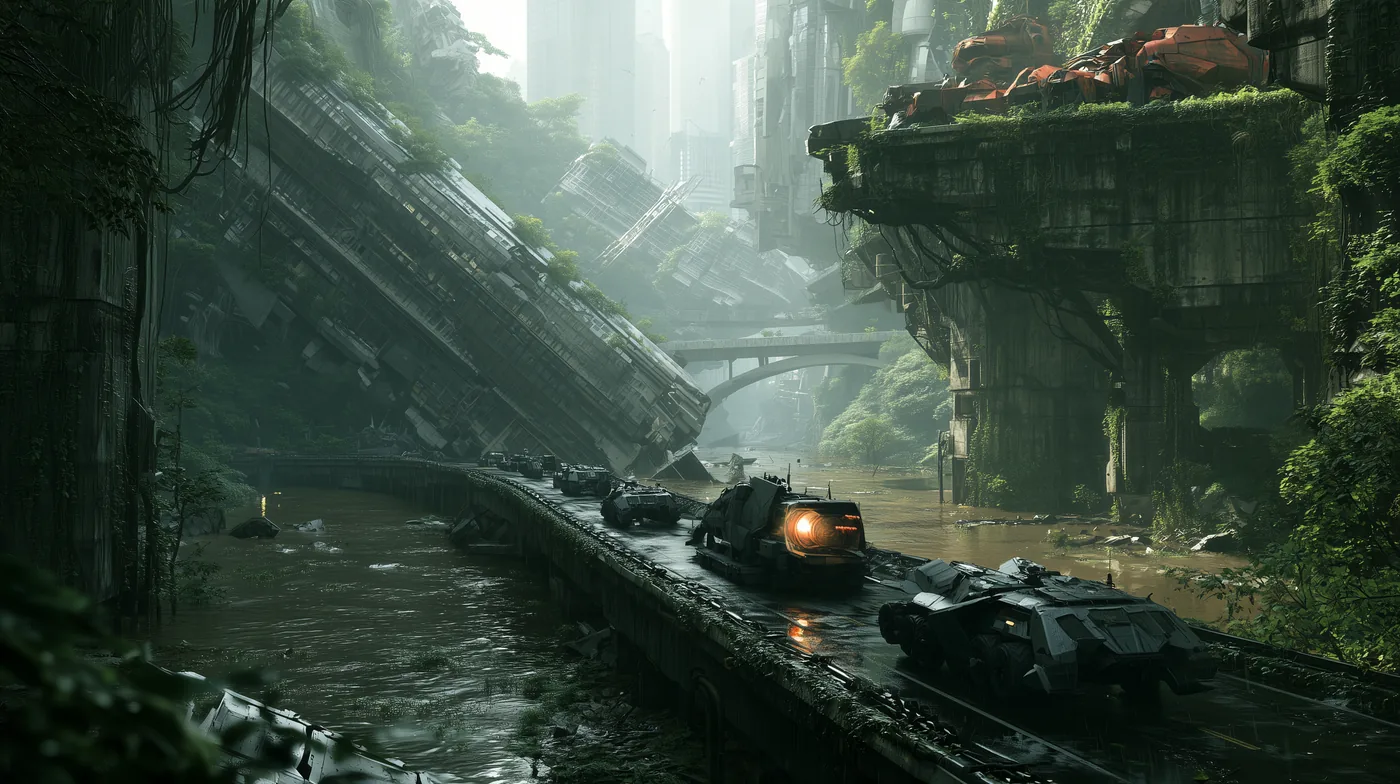
Ruined anchor cities, jungle, rivers and deltas. Convoys of fusion cells cross here on the way to Halcyon. Smugglers’ harbours in the deltas ship salvage out of the belt to buyers who are not supposed to have it. Rafael Duarte’s home ground.
The anchor city under Lift Three, the largest of the four. A coastal megacity with the elevator cable rising from its centre. It was wiped out within hours of the Fall. Nadir stands in its crater.
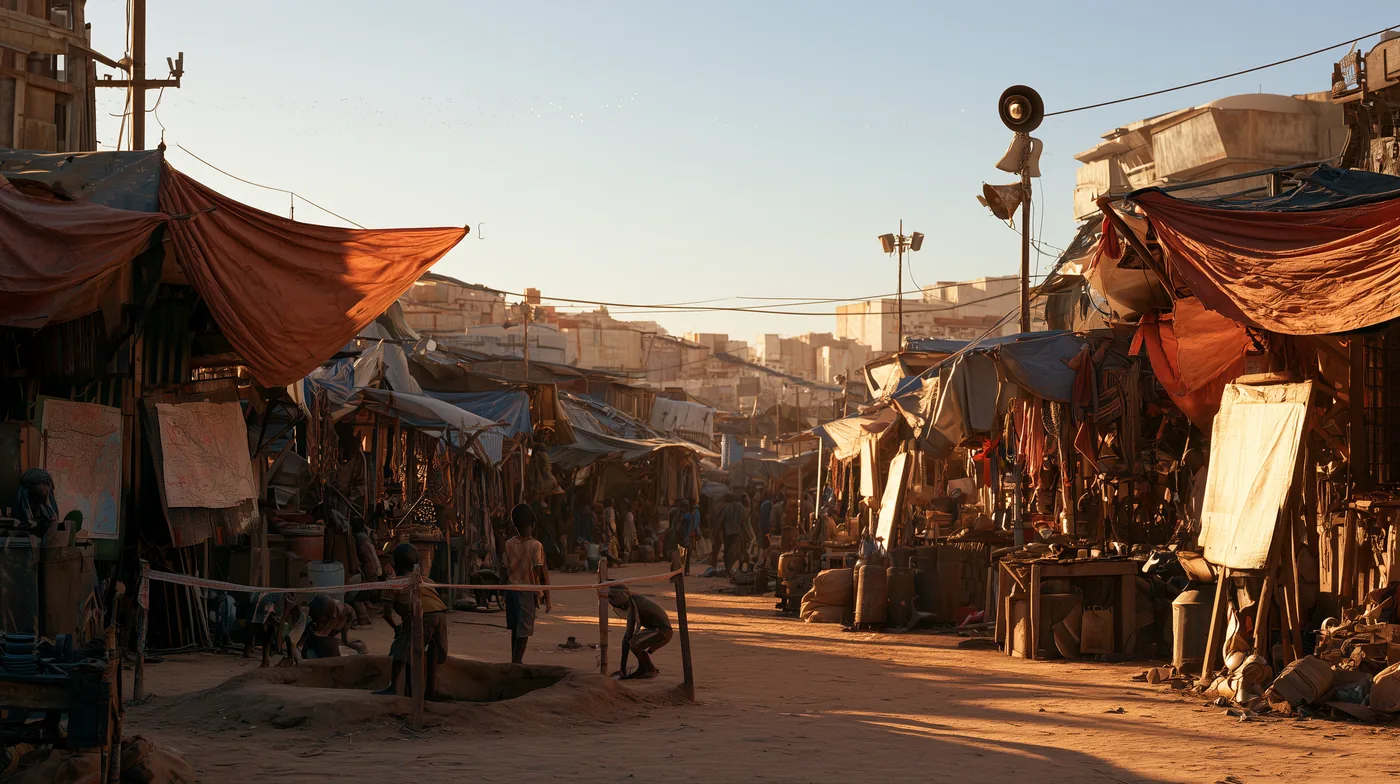
Crash maps on every market stall. Children learn the whistle of an incoming fragment before they learn to read.
The land remembers the Fall. Debris came in along one line, so every crater has a scorched streak and a throw of small debris on the same side; the whole belt agrees about where the sky came from. A few long gouges run across the land. Here and there a crashed habitat module with a path trodden to it, a snapped elevator cable as thick as a house, a Ring rib arching out of a hillside like bone.
Grass and trees grow where they can: along dry riverbeds, in the lee of a crater rim, around a yard. Acacia and baobab, some of them dead.
Two kinds of settlement sit on this ground. A League yard is beaten earth, tin roofs and lean-tos, a wind pump, scrap fences, tyre walls, washing lines and flags. Lived in. A Consortium site is a cleared, levelled survey pad: concrete, floodlight masts, a beacon. Tidy, and cold. You can tell whose ground you are on from the air.